
Psalm 32 speaks about sin, forgiveness, and a changed heart. When I read this psalm, its message feels very direct.
David shows what happens when we hide wrong choices. He also shows the freedom that comes with honest confession.
Psalm 32 is a psalm of David. It moves from guilt to forgiveness, then to guidance and joy. The chapter has only eleven verses, but each part adds to its main message. How many chapters are in the Bible
What Psalm 32 Teaches About Forgiveness
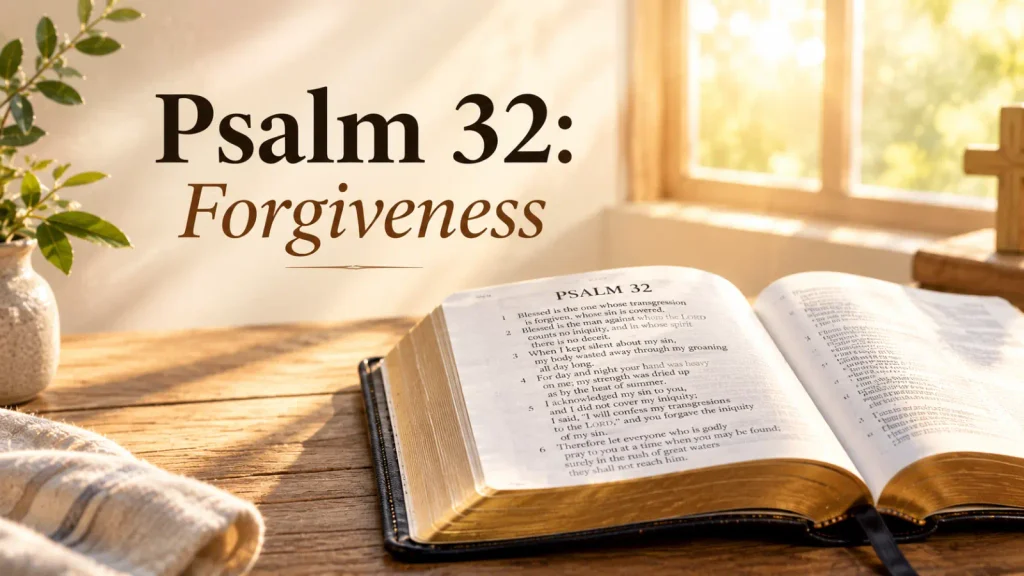
The opening verses focus on the blessing of forgiveness. David does not describe sin as something small or harmless.
He shows that hidden sin can affect a person’s inner life.
Psalm 32:1 — Forgiveness Brings Real Blessing
“Blessed is he whose transgression is forgiven, whose sin is covered.” (Psalm 32:1, KJV)
David begins with the joy of having sin forgiven. The verse points to a person whose guilt is no longer held against them.
This does not mean that our sins are unimportant. Instead, it shows the value of God’s forgiveness. What forgiveness means in the Bible
Takeaway: Forgiveness changes the burden carried by a guilty heart.
Psalm 32:2 — God Values an Honest Heart
Psalm 32:2 speaks about a person with no deceit. David connects forgiveness with honesty before God.
He is not praising people who pretend to be perfect.
The verse shows that hiding the truth is not the right path. A person can come before God without pretending.
Takeaway: God does not ask us to hide what He already knows.
Psalm 32 Shows the Cost of Hiding Sin
David then describes what happened when he stayed silent.
His words show deep inner pain. He felt worn down while refusing to admit his wrong.
Psalm 32:3-4 — Silence Made David Weary
David says that keeping silent affected him deeply. He says that he feels the weight of God’s hand on him.
These verses show the weight David felt before confession Bible verses about grief. The psalm does not say that every hard feeling comes from sin.
Here, David connects his distress with his own hidden wrongdoing.
Takeaway: Hiding a known wrong can make the heart feel heavy.
Psalm 32:5 — David Confesses His Sin
“I acknowledge my sin unto thee, and mine iniquity have I not hid.” (Psalm 32:5, KJV)
David changes his approach. He stops hiding his sin and admits it to God. The verse then says that God forgave him.
This is a key turning point in Psalm 32. David does not try to prove that he is right or give reasons for his actions. He speaks openly about what he has done.
Takeaway: Honest confession brings the matter into the open.
Psalm 32 Gives a Picture of God’s Protection
After confession, David speaks about prayer and God’s care. The psalm uses strong pictures to explain God’s protection.
Psalm 32:6 — Pray While Seeking God
David calls godly people to pray to God. He also uses rising waters as a picture of danger.
The image shows that trouble can come suddenly. David points people toward God instead of telling them to depend only on themselves.
Takeaway: Prayer keeps our attention on God during hard times.
Psalm 32:7 — God Is David’s Safe Place
“Thou art my hiding place; thou shalt preserve me from trouble.” (Psalm 32:7, KJV)
David describes God as his hiding place. He also says God surrounds him with songs of deliverance. Bible chapters about healing.
This does not promise a life without trouble. The verse shows where David turns when trouble comes.
Takeaway: David sees God as his place of safety.
Psalm 32 Offers Guidance for Daily Life
The next part changes from David speaking to God. It presents words of instruction and direction.
Psalm 32:8 — God Gives Direction
“I will instruct thee and teach thee in the way which thou shalt go.” (Psalm 32:8, KJV)
The verse presents God as a teacher and guide. It shows that God’s care includes direction, not only forgiveness.
For a Christian today, this can shape simple choices. It can affect how we speak, work, forgive, spend, and treat others. Psalm 112 on faithful living
Takeaway: God cares about the path a person chooses.
Psalm 32:9 — Do Not Wait for Force
David tells us not to act like a horse or a mule. Such animals need a bit and bridle to control them.
The picture is simple. God wants willing obedience rather than stubborn resistance. A person should not need constant pressure before doing what is right.
Takeaway: Learn to respond before life forces a hard lesson.
Psalm 32 Ends With Joy
The final verse brings the psalm back to joy. David has moved from hidden sin to confession, guidance, and praise.
Psalm 32:10–11 — Trust Leads to Rejoicing
Psalm 32 contrasts the troubles of wicked people with God’s mercy toward those who trust Him. It then calls the righteous to rejoice. Scriptures on hope and faith.
“Be glad in the Lord, and rejoice, ye righteous.” (Psalm 32:11, KJV)
The ending matters because the psalm does not stop with guilt. David ends with a call to joy.
The path through the psalm is clear. Sin is admitted, forgiveness is received, and life turns toward God.
Takeaway: Psalm 32 ends with praise instead of hiding.
How to Use Psalm 32 Today
Psalm 32 can speak to many ordinary moments. Someone may feel guilty after hurting a friend. Another person may know they need to admit a wrong choice.
This psalm gives a simple pattern for those moments:
- Admit the wrong instead of hiding it.
- Speak honestly to God in prayer.
- Accept His forgiveness.
- Ask for wisdom before making the next choice.
- Follow God’s direction instead of resisting it.
- Remember His mercy when guilt returns.
- Let your response move toward thankfulness.
Psalm 32 can also help during personal prayer morning scriptures to start your day. Read a few verses slowly. Think about what David admits and what changes afterward.
The goal is not to copy David’s exact situation. The goal is to understand the movement of the psalm and apply its truth carefully.
Common Questions About Psalm 32
Who wrote Psalm 32?
Psalm 32 is identified as a psalm of David. The opening heading describes it as a contemplative psalm.
What is the main message of Psalm 32?
Psalm 32 centers on forgiveness after confession. It also speaks about God’s protection, guidance, and mercy.
What does Psalm 32 say about confessing sin?
David says he acknowledged his sin and did not hide it. He then says that God forgave his sin.
Does Psalm 32 promise a life without trouble?
No. David speaks about trouble and rising waters. The psalm points to God as the person’s refuge during such situations.
Why is Psalm 32 important for Christians?
Psalm 32 gives a clear picture of repentance and forgiveness. It also shows the value of honest prayer and willing obedience.
The Last Word of Psalm 32
Psalm 32 takes the reader through a clear change. David begins by speaking about forgiveness.
He then describes hidden sin, confession, God’s guidance, and joyful praise.
The chapter shows that honesty with God matters. It also shows that forgiveness changes how a person moves forward.
For anyone reading Psalm 32 today, the message is simple. Do not build your life around hiding wrong choices.
Admit them, seek God’s direction, and walk forward with a heart ready to obey.


1 thought on “Psalm 32 (KJV): Meaning, Full Text & Forgiveness Lessons”